Sttellar Dawang Editorial Team
Posted on 2026-09-02


Posted on 2026-09-02
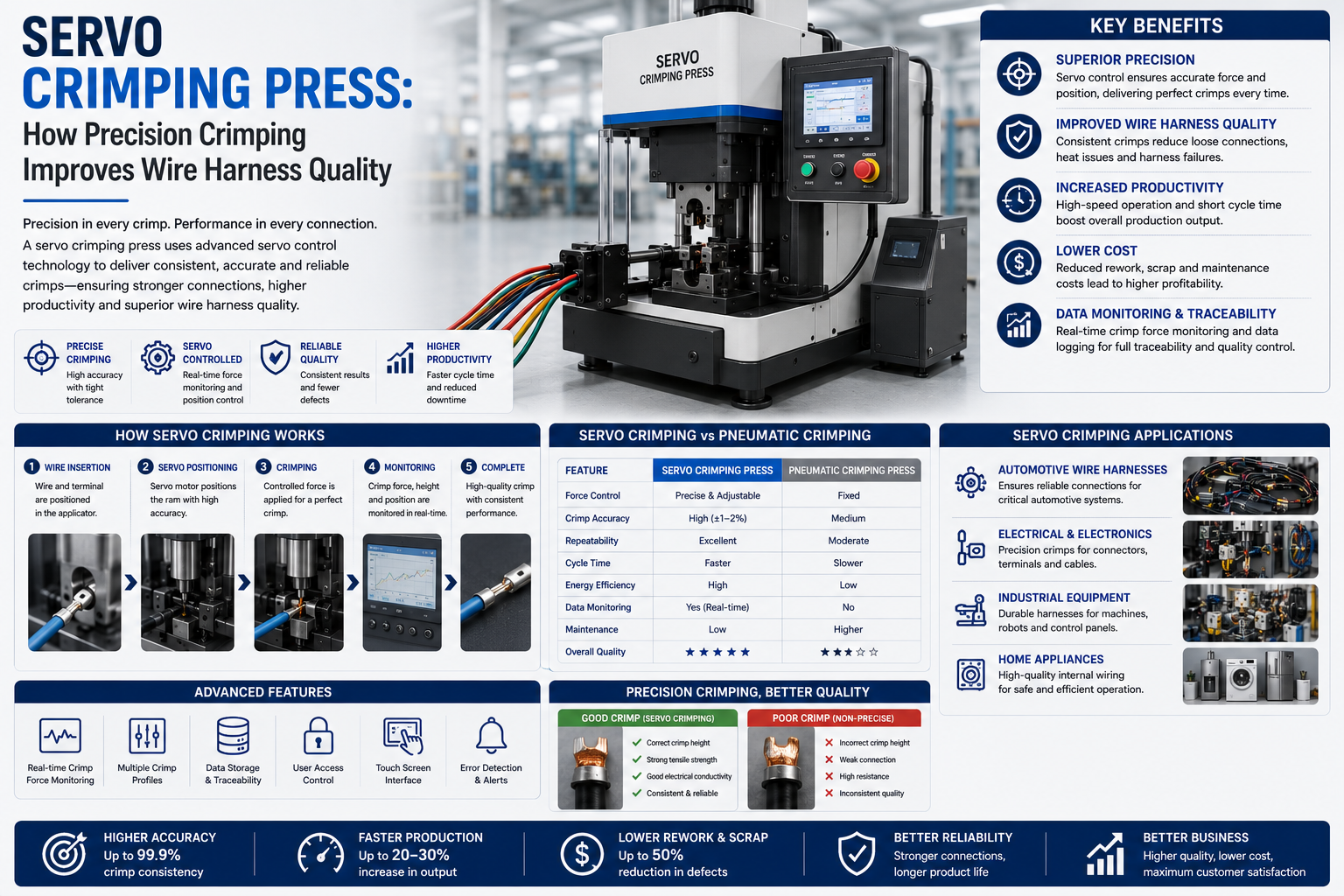
The crimp is the single most critical connection point in a wire harness — it's where the wire meets the terminal, and where most electrical failures originate if the connection isn't formed correctly. A servo crimping press uses a servo motor, rather than a mechanical flywheel or pneumatic cylinder, to control the crimping stroke with a level of precision that directly translates into more reliable harnesses.
Traditional mechanical crimping presses rely on a fixed stroke driven by a flywheel and clutch, offering limited control over crimp force and speed. A servo crimping press instead uses a programmable servo motor to control crimp height, speed, and force independently for each terminal type, allowing the press to be finely tuned rather than mechanically fixed.
Because the servo motor's position and force can be controlled and monitored electronically, a servo press can hold crimp height tolerances tighter than mechanical alternatives, and it can adjust automatically for terminal-to-terminal variation. Most servo presses also generate a force-displacement curve for every crimp cycle, which can be compared against a reference curve to catch defects like missing wire strands or misfed terminals in real time.
The crimp curve data from a servo press provides an objective, quantifiable record of crimp quality for every single cycle — not just a sample. This makes it far easier to demonstrate process control to automotive or aerospace customers, and it gives quality teams a clear trail to investigate if a field failure is ever traced back to a specific crimp.
Servo presses also tend to run quieter and more energy-efficiently than mechanical presses, since the motor only draws power during the actual crimp stroke. Changeover between terminal types is typically faster too, since crimp height and force settings can be recalled from a stored program rather than requiring mechanical adjustment.
A servo crimping press brings precision, adjustability, and built-in quality monitoring to the most critical step in wire harness assembly. For manufacturers serious about crimp quality and traceability, servo technology has become the clear upgrade path over traditional mechanical crimping presses.
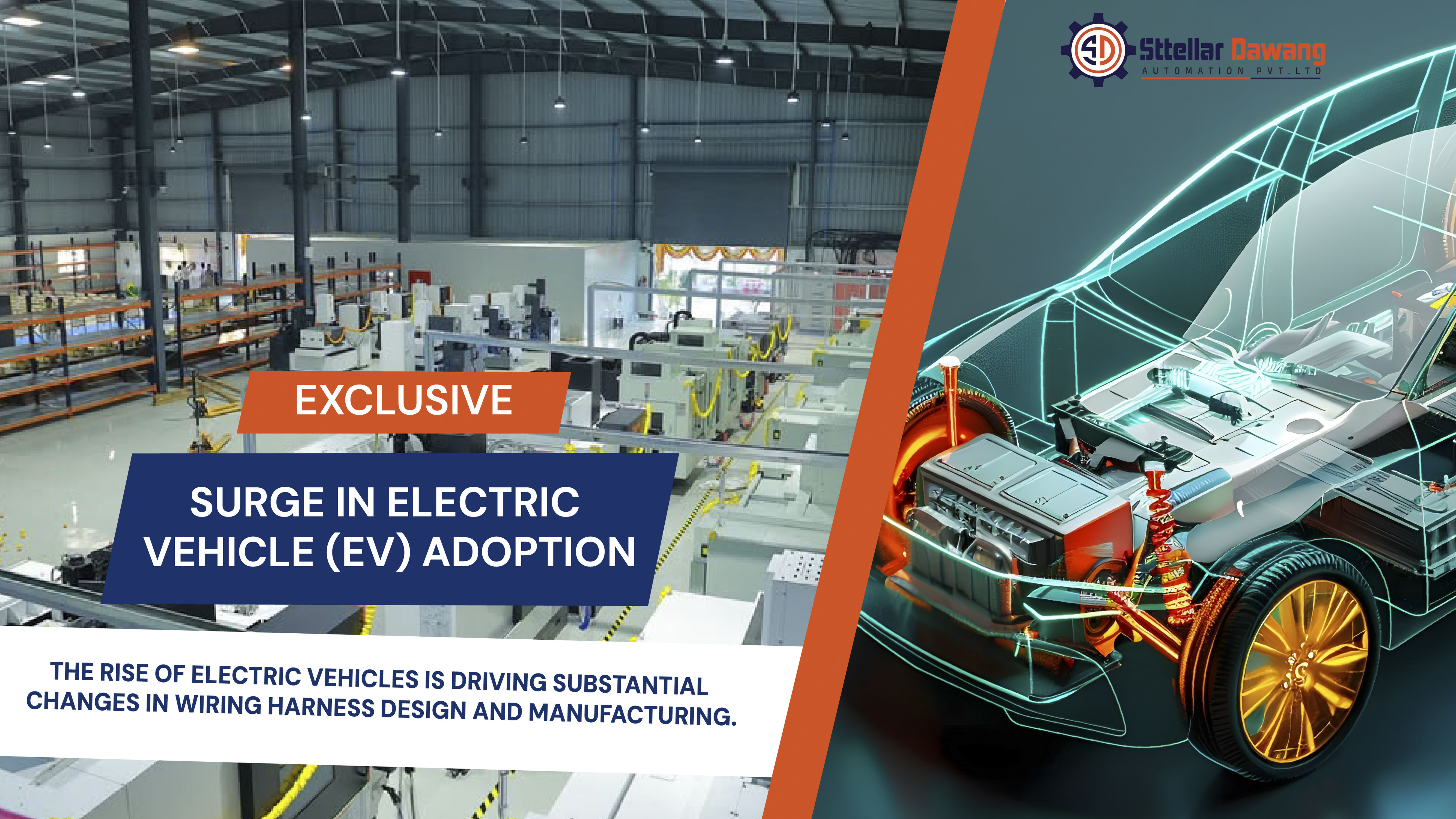
The rise of electric vehicles is driving substantial changes in wiring harness design and manufacturing. EVs require specialized high-voltage wiring systems to manage battery power and integrate with ...
Read More
Dive deep into the evolving world of electronics and electrical engineering with industry insights, tutorials, product innovations, expert tips, and real-world projects shaping the future of technolog...
Read More
Discover how cutting-edge electronics and electrical innovations are transforming the railway industry with smarter control systems, energy-efficient traction, predictive maintenance, and IoT-enabled ...
Read MoreSign up today Writing copy is time-consuming and difficult. Headlime's artificial intelligence can take your thoughts.