Sttellar Dawang Editorial Team
Posted on 2026-03-23

Posted on 2026-03-23
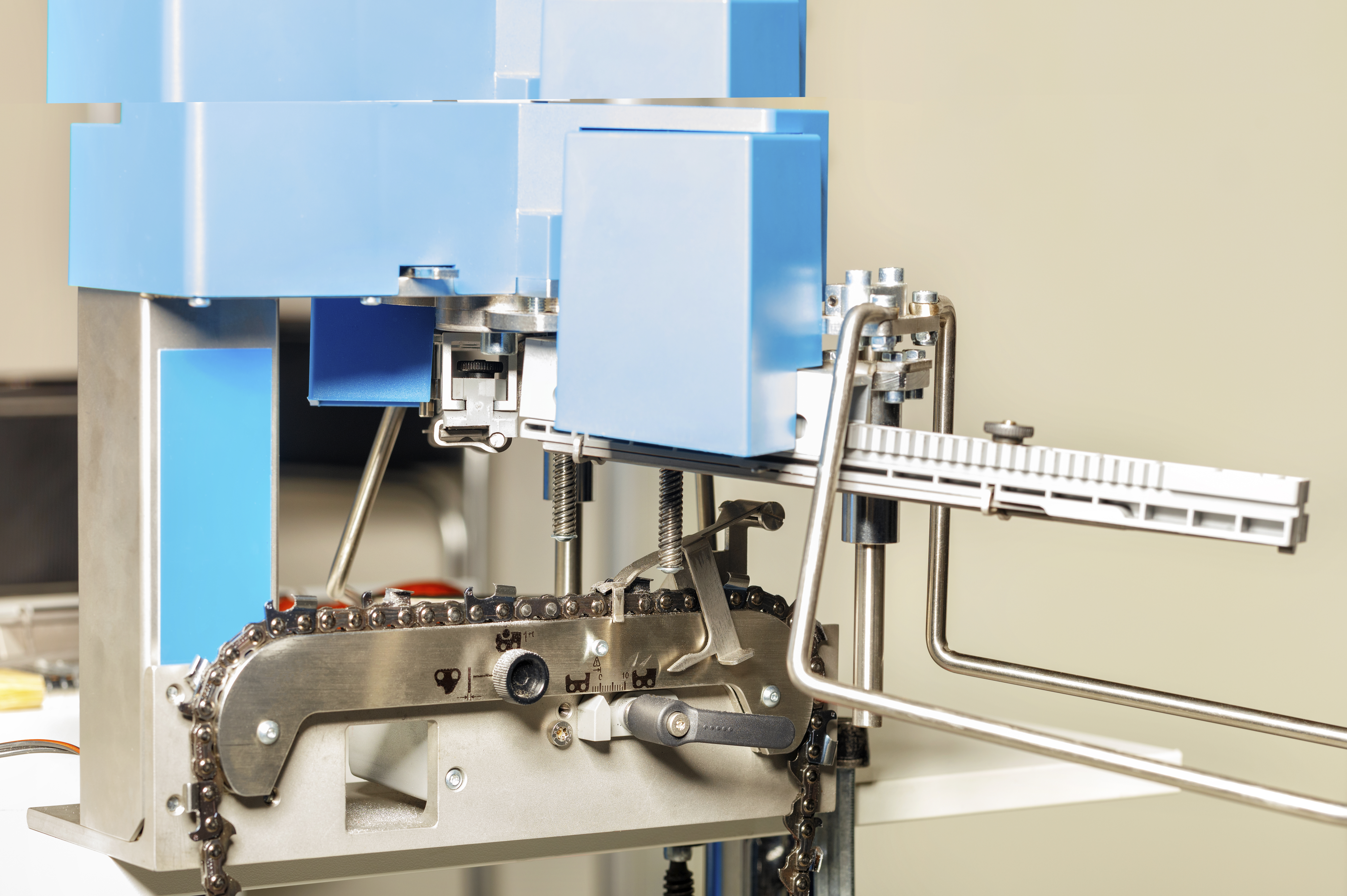
Vertical injection moulding machines occupy a unique and indispensable position in the manufacture of electrical components. Their vertical clamping axis and open mould access make them the preferred platform for insert moulding and overmoulding — encapsulating metal terminals, wire assemblies, and electrical inserts in precision plastic housings. Stellar Dawang's vertical injection moulding machines are engineered for the exacting demands of electrical component manufacturing, combining precision, repeatability, and ergonomic operator access.
In a vertical injection moulding machine, the clamping unit operates on a vertical axis — the mould opens and closes vertically, with the injection unit mounted above or to the side. This configuration has two major advantages for electrical component manufacturing: gravity assists insert placement and retention in the lower mould half, and the open mould face allows operators to place inserts and retrieve moulded parts simultaneously — significantly improving cycle efficiency.
Vertical injection moulding machines from Stellar Dawang are widely used in electrical and electronic manufacturing applications where insert placement accuracy, overmoulding quality, and production efficiency are critical.
Vertical injection moulding machines are the standard platform for overmoulding cable connectors, strain reliefs, and junction boxes directly onto wire assemblies. The vertical mould orientation prevents the cable from displacing the insert during mould close, ensuring consistent overmould geometry and seal integrity.
Metal terminals, contacts, and bus bars are placed into the lower mould half, and the plastic housing is moulded around them in a single shot. The vertical configuration ensures gravity holds the inserts in position during placement, eliminating the positional errors common in horizontal machines.
Precision electrical sensor housings, solenoid coil bobbins, and actuator end caps are produced with tight dimensional tolerances using Stellar Dawang's vertical machines — ensuring reliable component fitment in automated assembly processes.
Stellar Dawang vertical injection moulding machines feature closed-loop injection control, cavity pressure monitoring, and integrated statistical process control (SPC). Mould temperature controllers, hot runner controllers, and robot integration options support fully automated production cells with consistent cycle-to-cycle quality. All machines comply with CE safety standards and are available with EUROMAP 67 robot interface for automated insert loading and part removal.
Vertical Injection Moulding Machines from Stellar Dawang are purpose-built for the precision, efficiency, and quality demands of electrical component manufacturing. Whether you are overmoulding wire assemblies, insert-moulding terminals, or producing connector housings, our machines deliver the performance you need to stay competitive. Contact Stellar Dawang today to discuss your moulding requirements and arrange a technical consultation.
In cable processing and wire harness manufacturing, stripping insulation cleanly and consistently is one of the most fundamental — and challenging — tasks on the production floor. Pneumatic wire strip...
Read More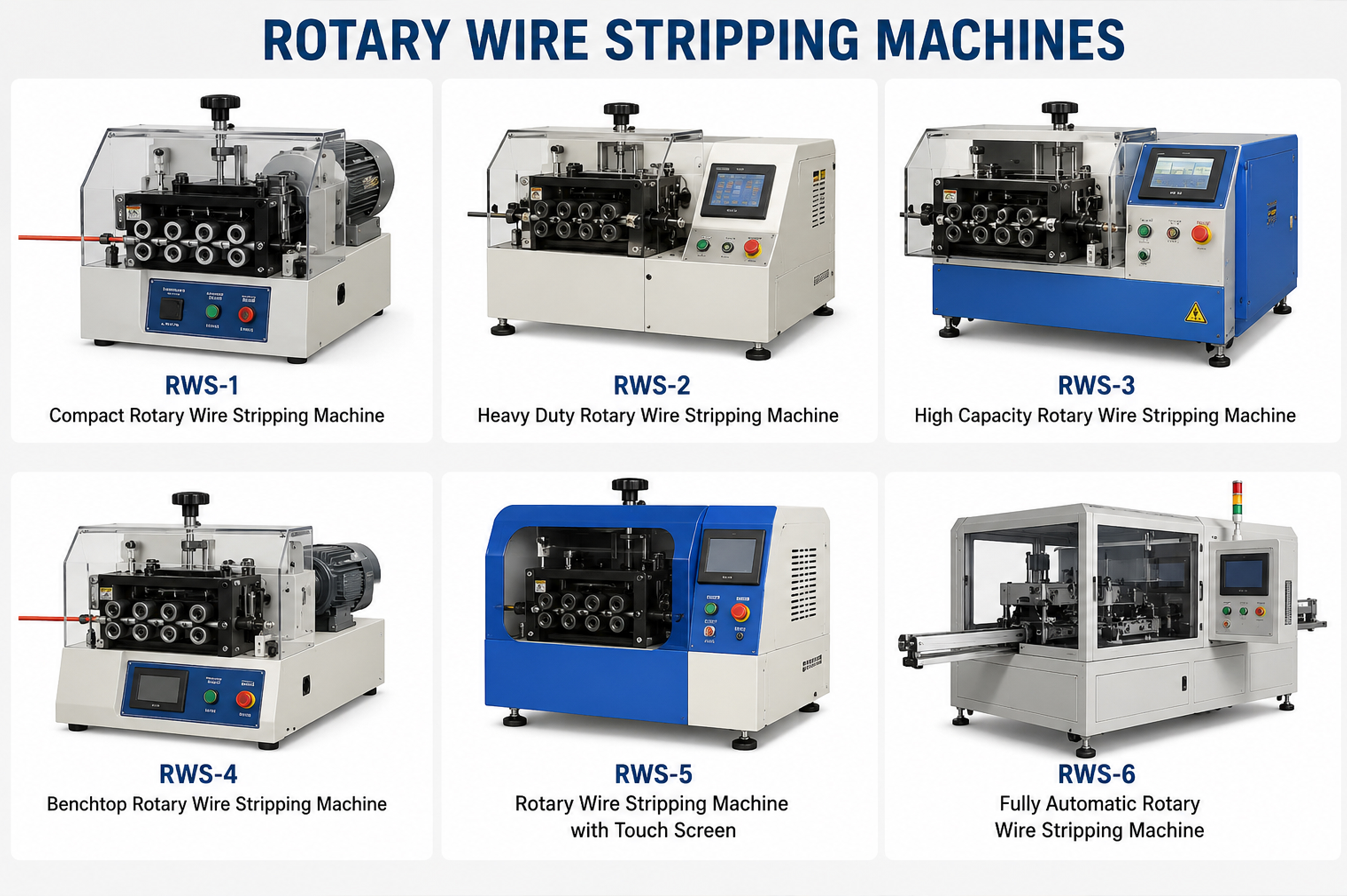
Not all cable stripping tasks are equal. While standard pneumatic strippers handle single-layer insulated wire with ease, complex cable constructions — multi-layer insulation, shielded cables, coaxial...
Read More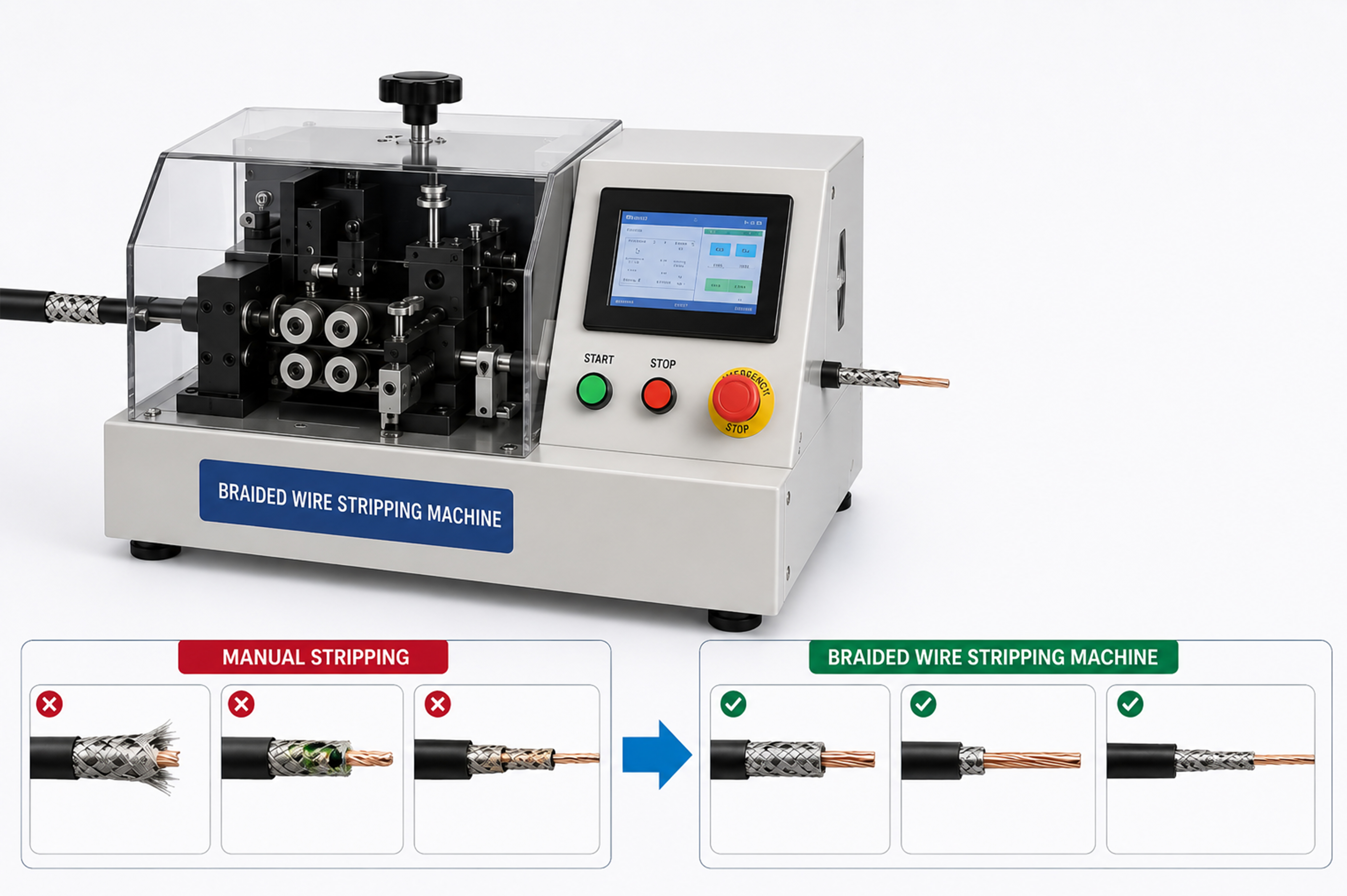
Braided shields are a fundamental component of shielded cables, EMI-suppressed assemblies, and high-performance data cables. They provide electromagnetic interference protection, mechanical reinforcem...
Read MoreSign up today Writing copy is time-consuming and difficult. Headlime's artificial intelligence can take your thoughts.