Sttellar Dawang Editorial Team
Posted on 2026-09-02


Posted on 2026-09-02
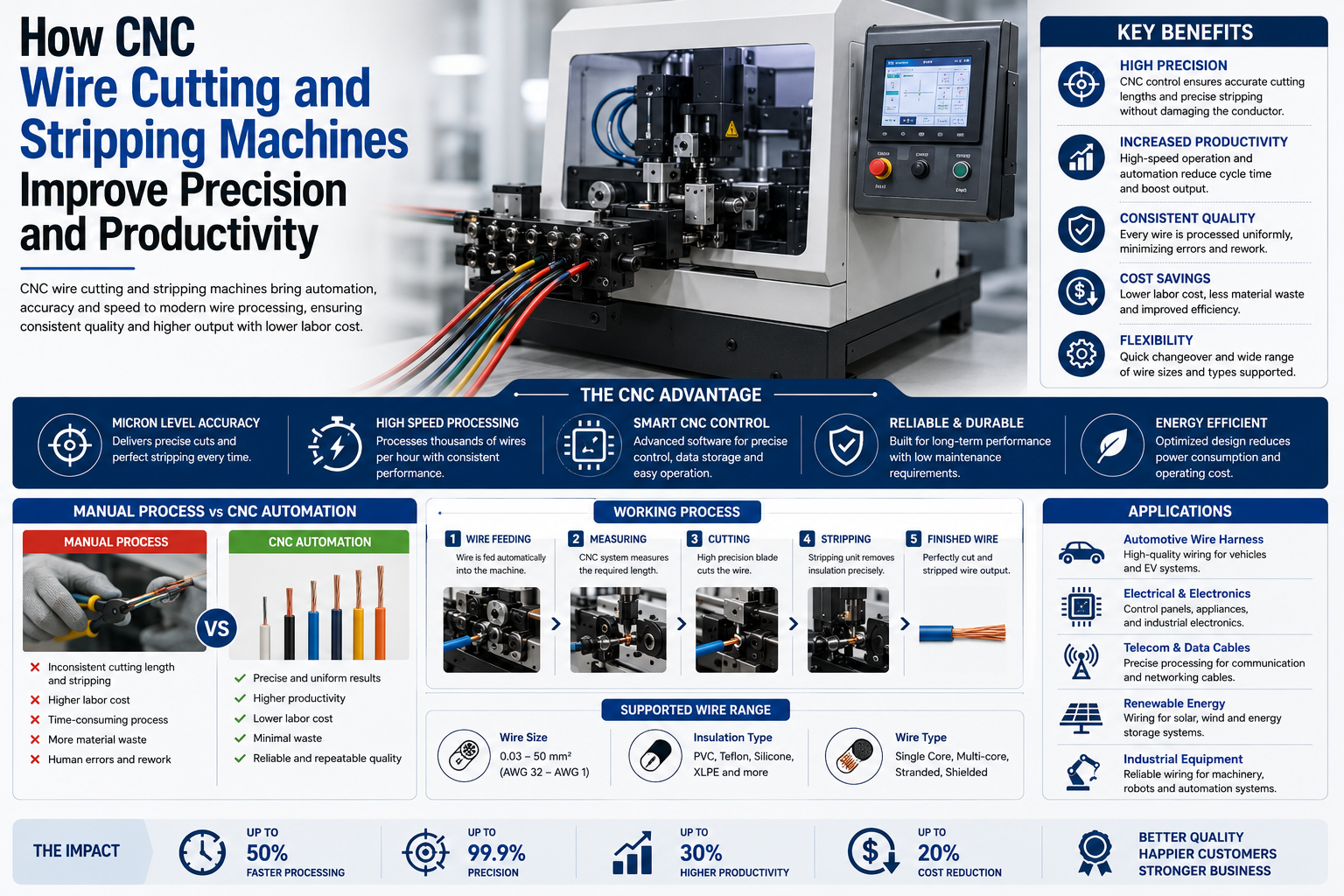
Cutting and stripping wire sounds simple, but at production scale, even small inconsistencies in length or strip depth can cause downstream problems — from failed crimp inspections to harnesses that don't fit their connector housings. CNC wire cutting and stripping machines solve this by controlling every stage of the process digitally, delivering the repeatability that manual or semi-automatic cutting simply can't match.
CNC (Computer Numerical Control) wire cutting and stripping machines use programmed instructions to control blade positioning, feed length, and strip depth with high precision. Operators enter or select a program for a given wire type and length, and the machine repeats that exact process cycle after cycle, removing the variability that comes from manual measurement or blade adjustment.
Because cut length and strip depth are digitally controlled, CNC machines can typically hold tolerances of a fraction of a millimeter, even across different wire gauges and insulation types. This precision matters directly for downstream crimping, since a strip length that's too long or too short leads to exposed conductor or insulation caught in the crimp — both of which are common causes of rejected harnesses.
Beyond precision, CNC machines significantly increase throughput. Automatic wire feeding, cutting, and stripping in a single continuous motion can process wire far faster than a manual operator, and quick program changeovers mean a line can switch between different wire lengths or gauges in minutes rather than requiring a full mechanical setup. Many machines also support batch counting and automatic stacking or bundling, reducing labor needs further downstream.
CNC cutting and stripping machines are often the first automated step in a wire harness line, feeding pre-cut, pre-stripped wires into crimping presses, ultrasonic welders, or connector loading stations. Choosing a machine with the right wire gauge range, feed speed, and program storage capacity helps keep this first step from becoming a bottleneck for everything downstream.
CNC wire cutting and stripping machines give manufacturers a level of precision and repeatability that manual processes can't achieve, while also increasing the raw throughput of the line. For any operation producing wire harnesses or cable assemblies at scale, this equipment is typically one of the first and most impactful automation investments.
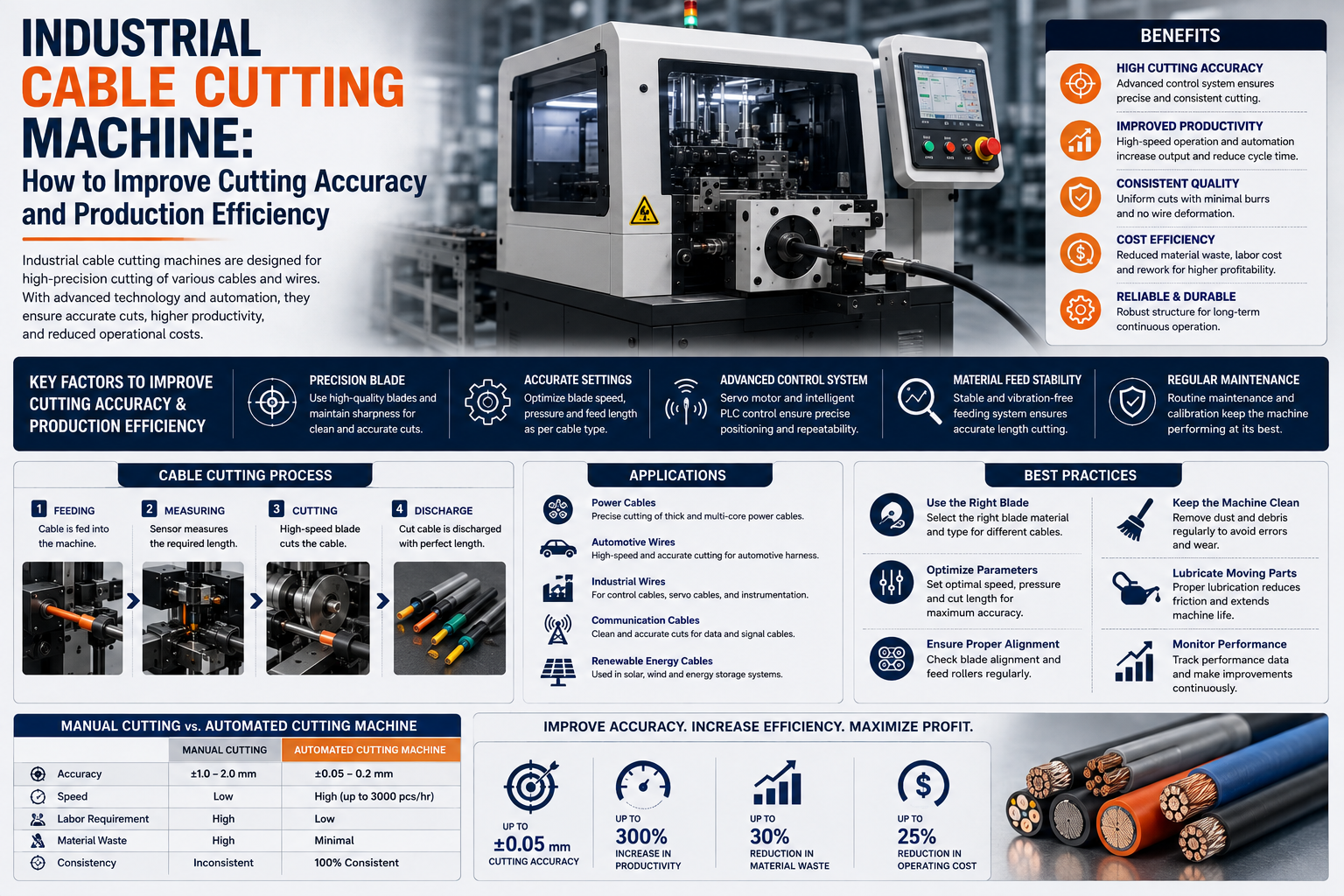
Cables used in industrial, construction, and infrastructure applications are often thicker, more heavily shielded, and more varied in construction than the wires used in electronics assembly. Cutting ...
Read More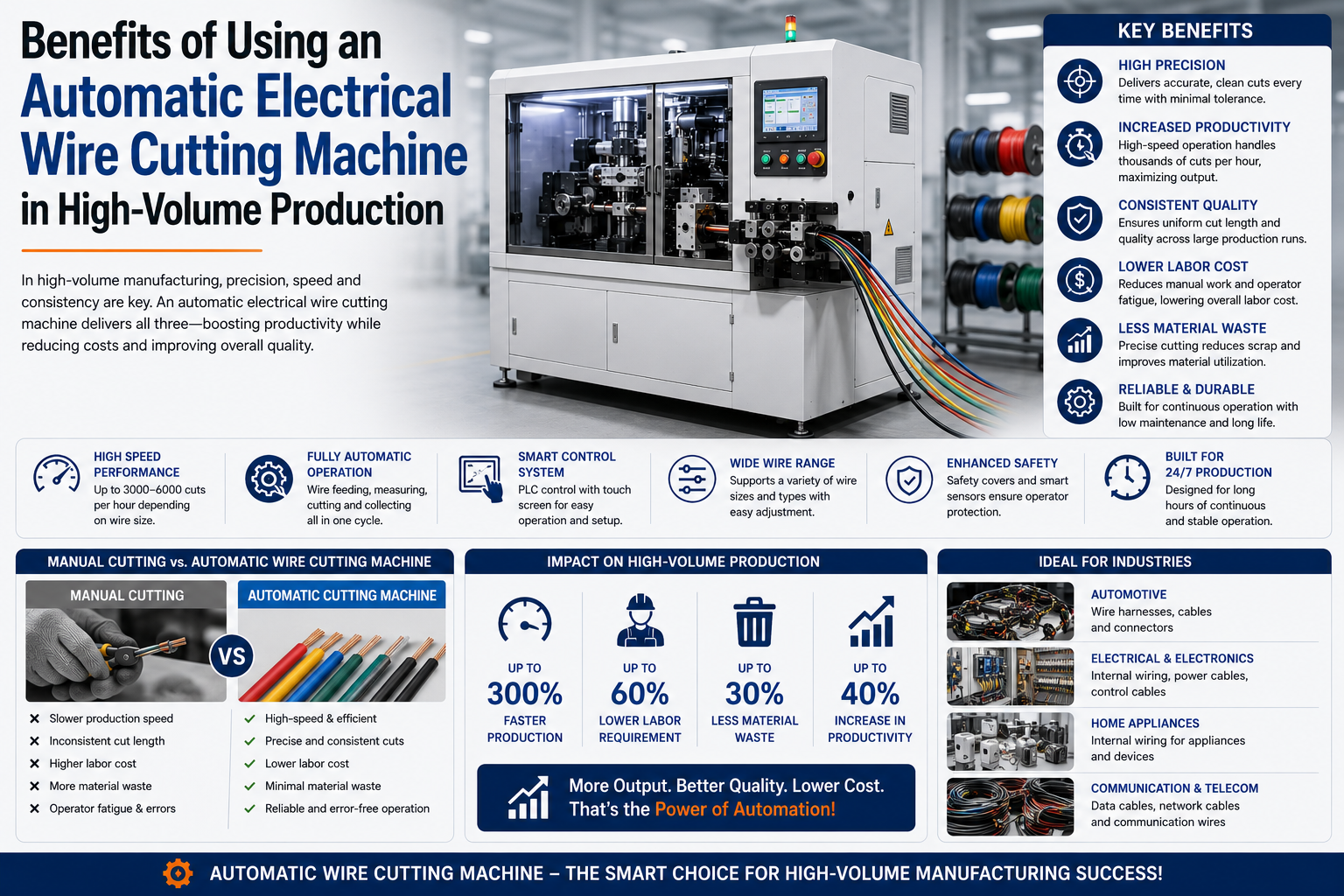
When production volumes climb into the thousands or tens of thousands of pieces per day, manual wire cutting becomes both a bottleneck and a source of inconsistency. An automatic electrical wire cutti...
Read More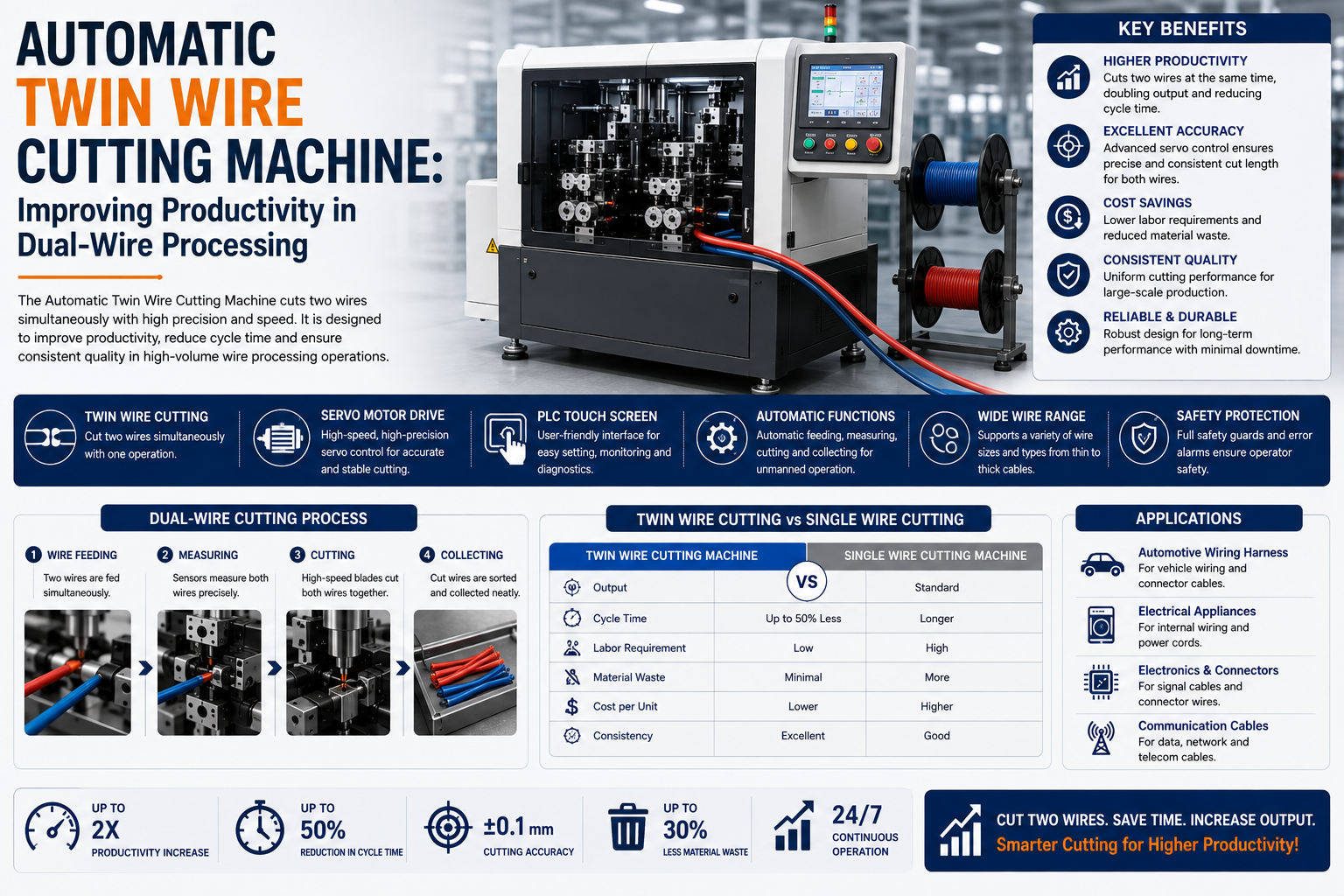
Many wire harnesses and cable assemblies require two wires to be cut, stripped, and sometimes terminated together — such as twisted pairs, power-and-ground sets, or paired signal wires. An automatic t...
Read MoreSign up today Writing copy is time-consuming and difficult. Headlime's artificial intelligence can take your thoughts.