Sttellar Dawang Editorial Team
Posted on 2026-09-02


Posted on 2026-09-02
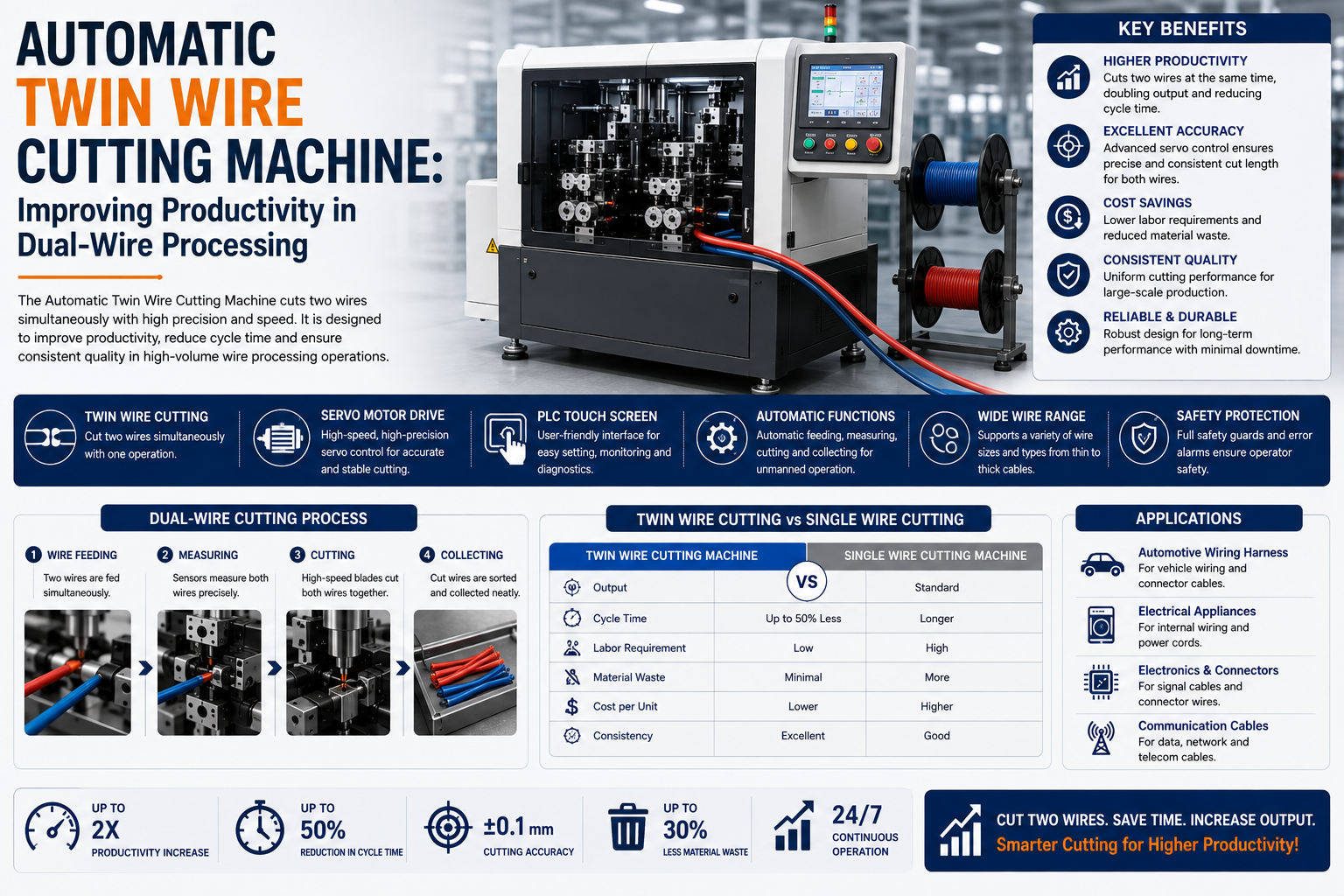
Many wire harnesses and cable assemblies require two wires to be cut, stripped, and sometimes terminated together — such as twisted pairs, power-and-ground sets, or paired signal wires. An automatic twin wire cutting machine is designed to process two wires simultaneously, cutting production time roughly in half compared to running single-wire machines through the same job twice.
A twin wire cutting machine feeds two wire reels through parallel feed and cutting mechanisms, synchronizing both wires so they're cut, stripped, and moved to the next process step together. Some machines allow the two wires to be different gauges or colors, which is useful for producing matched-pair sets like power and return conductors.
The core benefit is straightforward: processing two wires per cycle instead of one roughly doubles throughput for any application that genuinely needs paired wires. This is especially valuable for harnesses with large numbers of twisted-pair or paired-circuit connections, where running two separate single-wire machines would otherwise be needed to keep up with volume.
Twin wire cutting machines are common in automotive harness production for twisted-pair data lines, in appliance wiring for paired power leads, and in industrial control panel building where sensor and signal wires are frequently run in pairs. They're also useful for producing pre-twisted wire sets that feed directly into twisting or ultrasonic welding equipment.
Look for independent tension control on each wire feed, since mismatched tension between two wires can cause length or strip inconsistencies between the pair. Also consider whether the machine supports different wire gauge combinations, and how easily it integrates with downstream twisting, crimping, or bundling equipment.
For harness and cable assembly work built around paired wires, an automatic twin wire cutting machine delivers a real productivity advantage by processing both wires in a single synchronized cycle. It's a practical upgrade for any line where twisted pairs or matched wire sets make up a significant share of production.
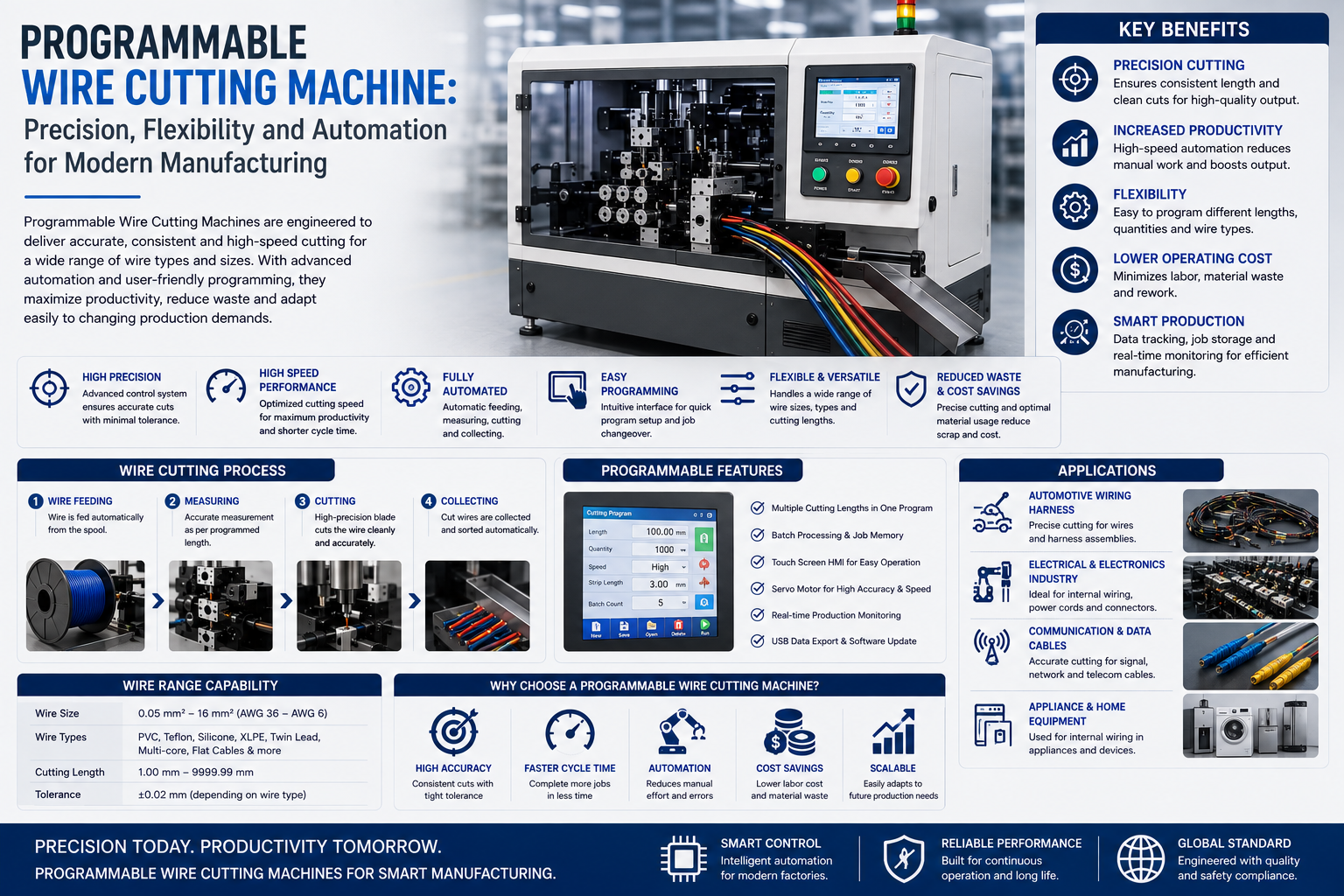
Manufacturers rarely produce just one wire length or gauge — most wire harness and cable assembly operations need to switch between dozens of different specifications over the course of a week, or eve...
Read More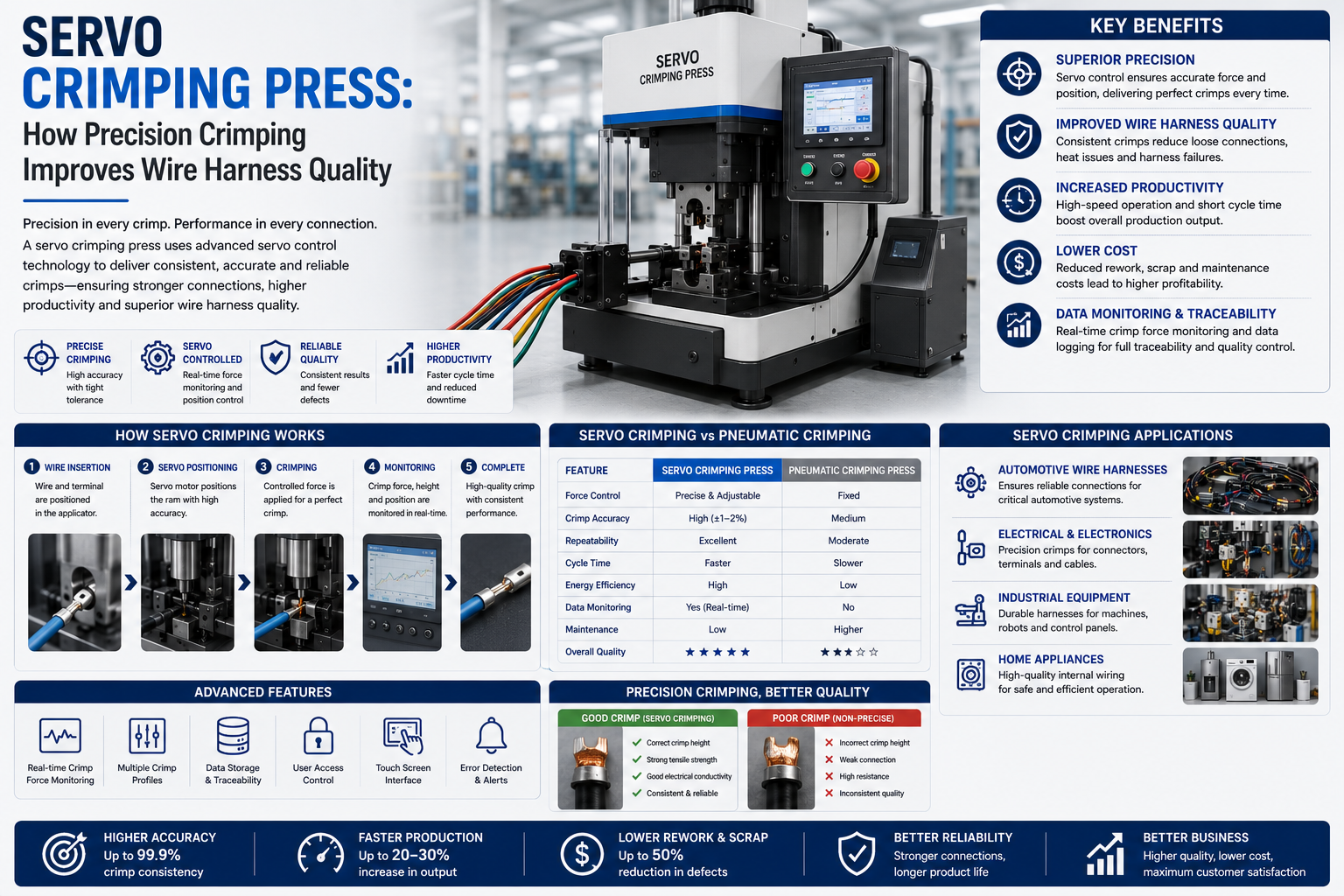
The crimp is the single most critical connection point in a wire harness — it's where the wire meets the terminal, and where most electrical failures originate if the connection isn't formed correctly...
Read More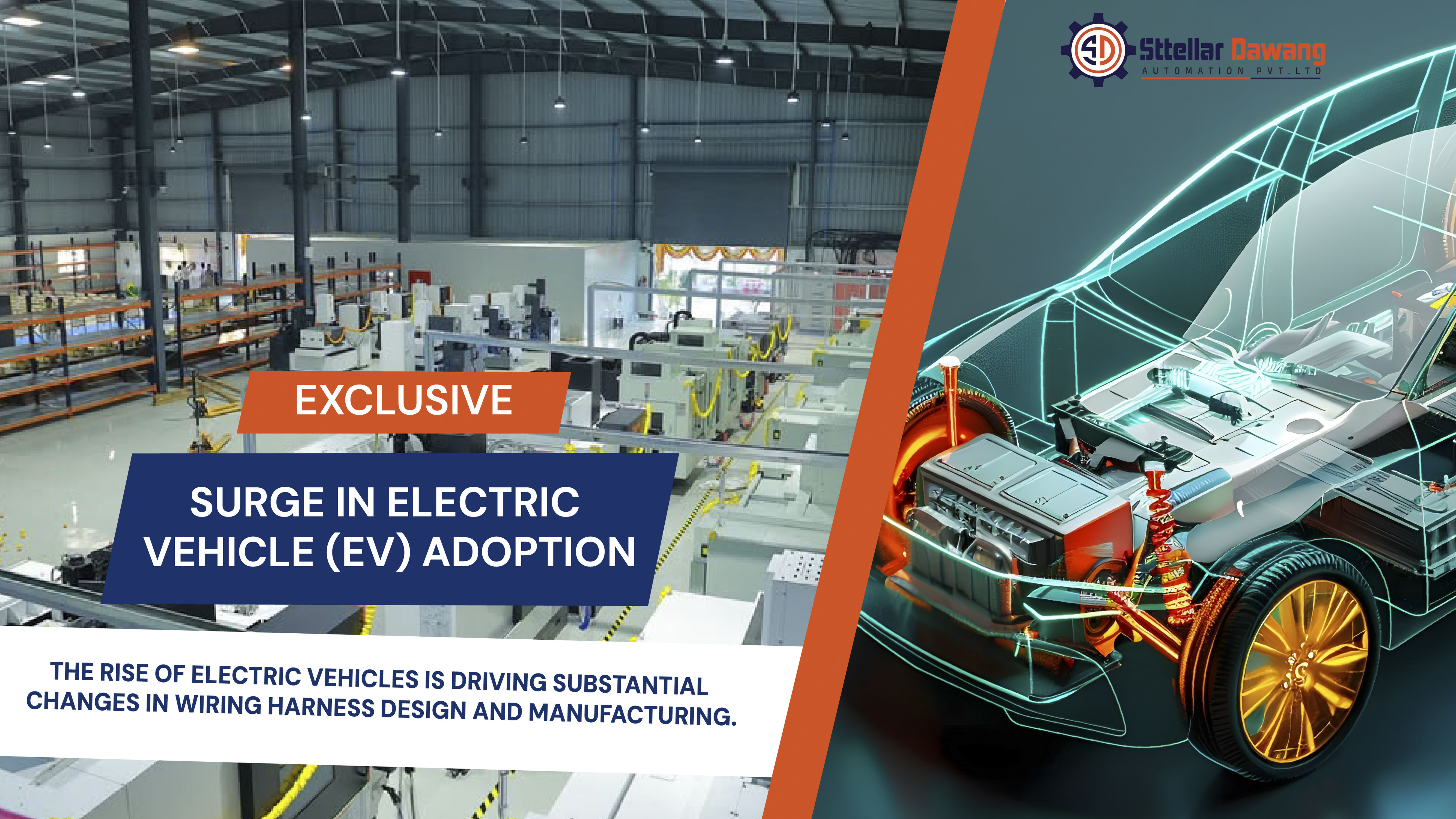
The rise of electric vehicles is driving substantial changes in wiring harness design and manufacturing. EVs require specialized high-voltage wiring systems to manage battery power and integrate with ...
Read MoreSign up today Writing copy is time-consuming and difficult. Headlime's artificial intelligence can take your thoughts.