Sttellar Dawang Editorial Team
Posted on 2026-09-02


Posted on 2026-09-02
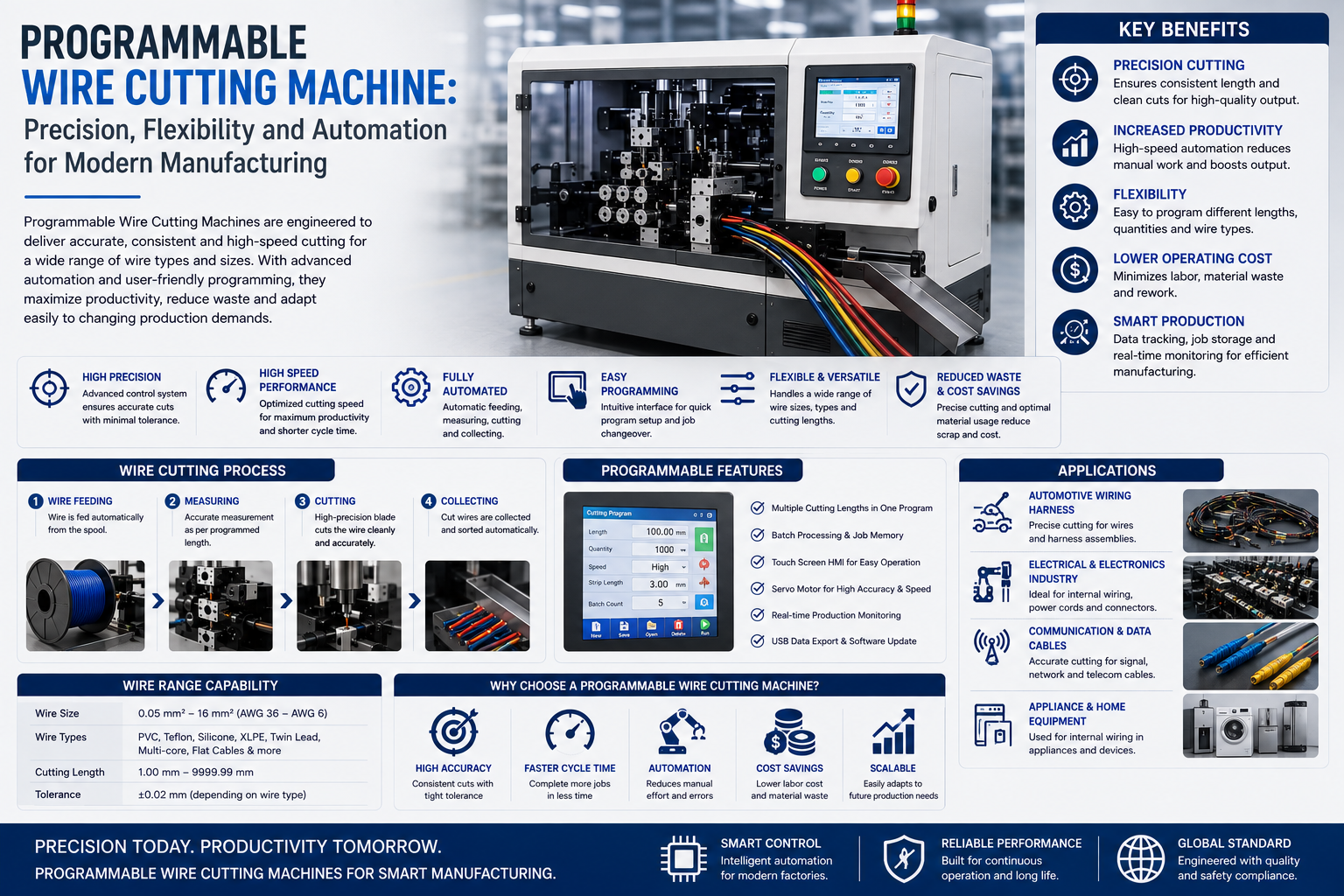
Manufacturers rarely produce just one wire length or gauge — most wire harness and cable assembly operations need to switch between dozens of different specifications over the course of a week, or even a shift. A programmable wire cutting machine is built around this reality, letting operators store and recall cutting programs instead of manually resetting the machine for every job change.
A programmable wire cutting machine lets operators define parameters such as cut length, quantity, blade pressure, and feed speed for a specific wire type, then save that configuration as a program. When that job comes up again, the operator simply recalls the saved program instead of re-entering settings from scratch, cutting setup time dramatically.
Because cutting parameters are stored digitally rather than set manually on dials or stops, programmable machines eliminate the drift and human error that can creep into manual length setting over a shift. Length accuracy tends to stay consistent from the first cut of a program to the last, even across multiple production runs of the same job weeks apart.
For manufacturers running mixed, lower-volume, or make-to-order production, this flexibility is often more valuable than raw cutting speed. A programmable machine can move from a 50-piece custom order to a 5,000-piece standard run without retooling — just a program selection — making it easier to keep the line profitable across a varied order book.
Many programmable wire cutting machines also log production data by program — piece counts, cycle times, and machine status — which can feed into production scheduling or quality systems. This gives plant managers visibility into machine utilization and job progress without needing separate manual tracking.
A programmable wire cutting machine brings both precision and flexibility to wire processing, letting manufacturers move quickly between different jobs without sacrificing cut accuracy. For operations with varied product mixes or frequent changeovers, this programmability is often what makes automation practical and profitable.
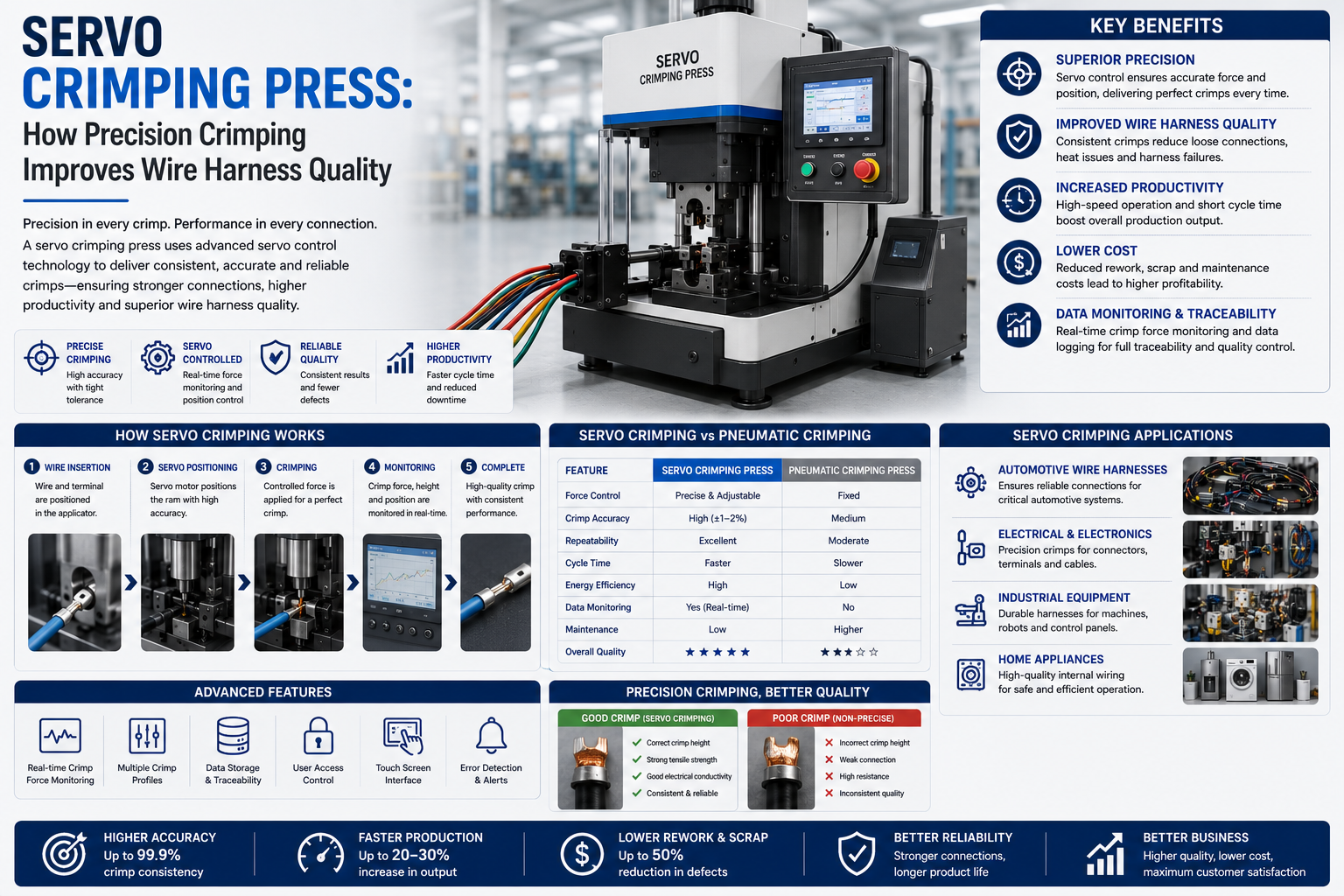
The crimp is the single most critical connection point in a wire harness — it's where the wire meets the terminal, and where most electrical failures originate if the connection isn't formed correctly...
Read More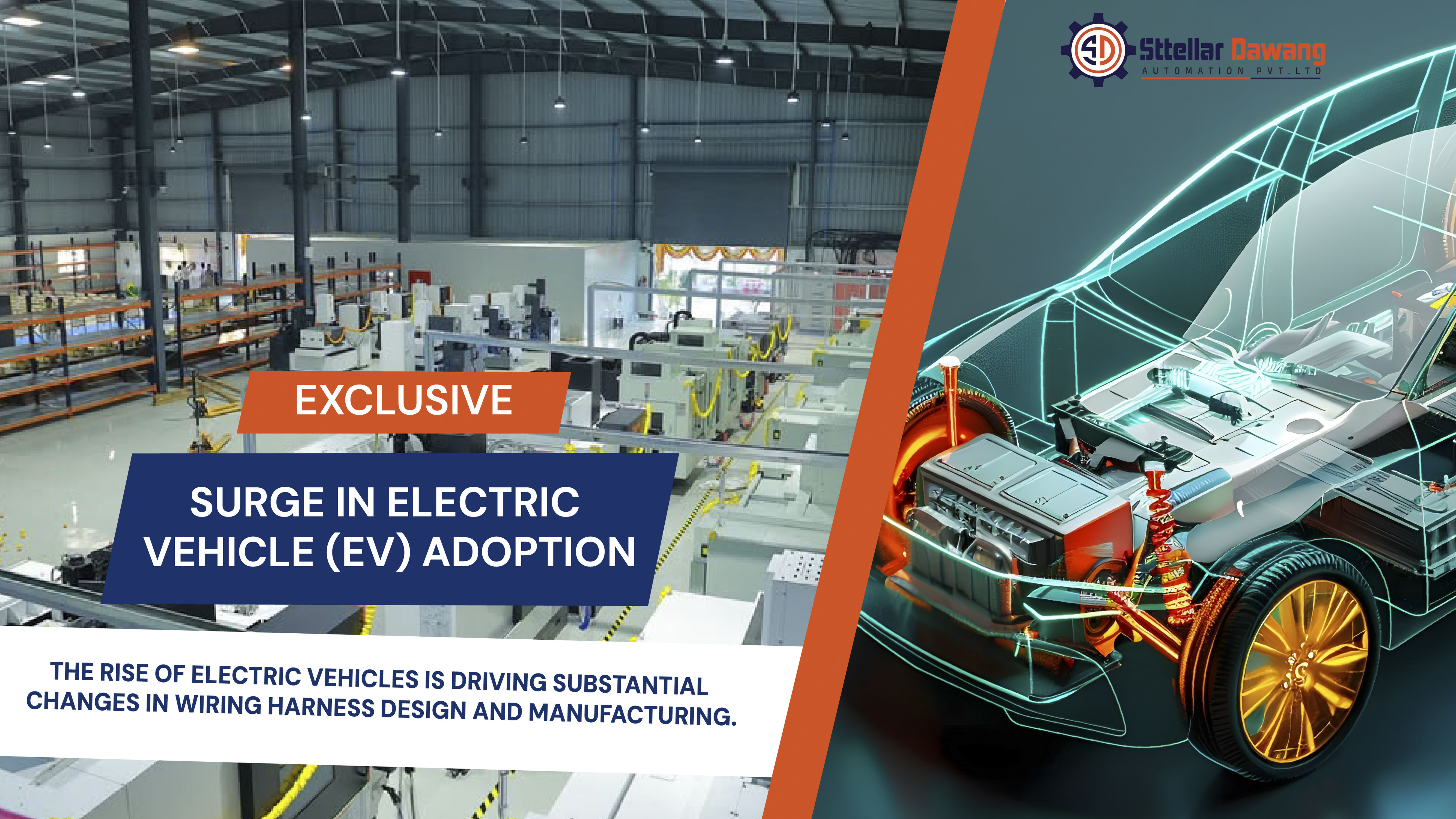
The rise of electric vehicles is driving substantial changes in wiring harness design and manufacturing. EVs require specialized high-voltage wiring systems to manage battery power and integrate with ...
Read More
Dive deep into the evolving world of electronics and electrical engineering with industry insights, tutorials, product innovations, expert tips, and real-world projects shaping the future of technolog...
Read MoreSign up today Writing copy is time-consuming and difficult. Headlime's artificial intelligence can take your thoughts.