Sttellar Dawang Editorial Team
Posted on 2026-09-02


Posted on 2026-09-02
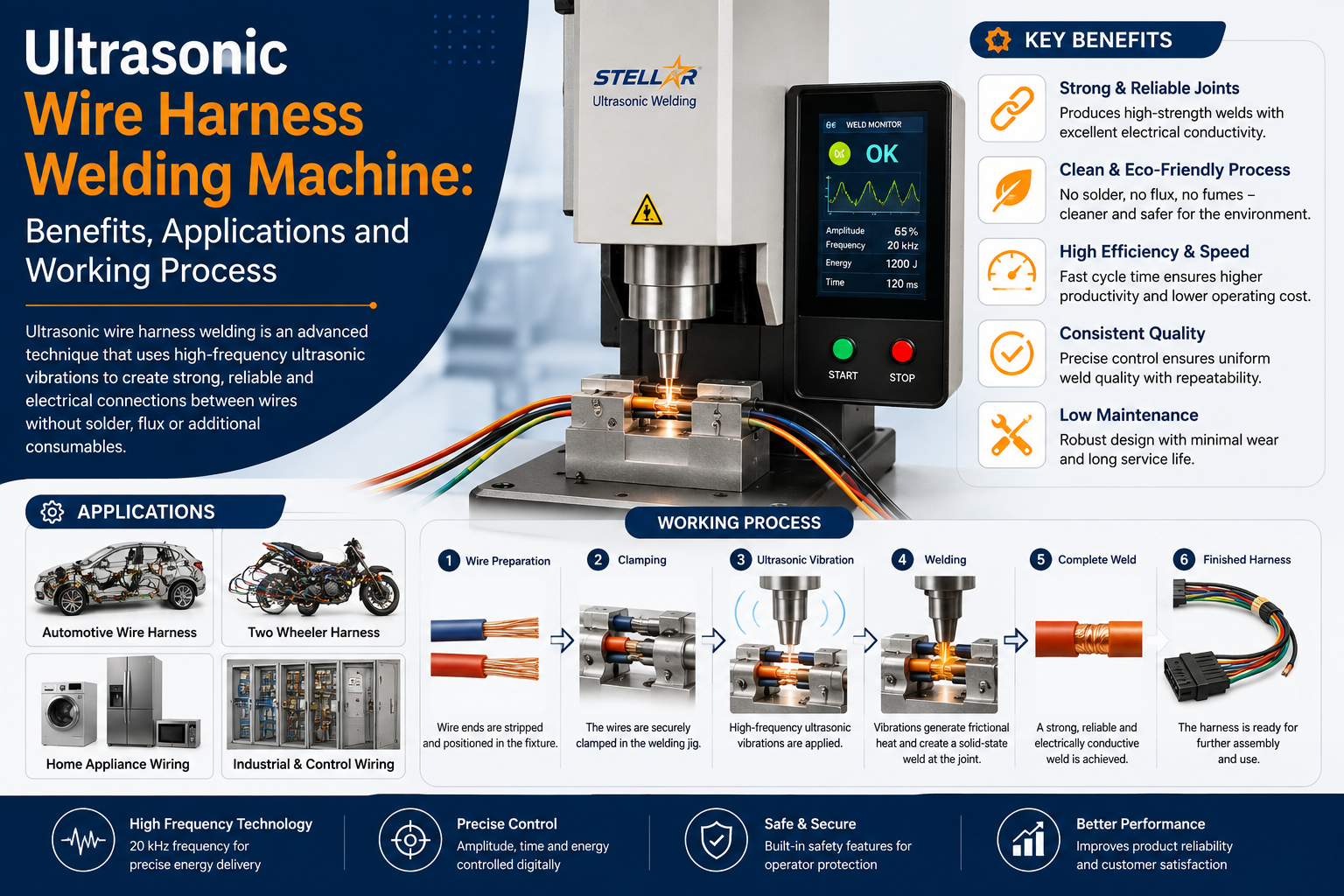
As wire harnesses grow more complex — with more circuits packed into smaller connectors — traditional soldering and mechanical splicing struggle to keep up with both speed and reliability requirements. Ultrasonic wire harness welding machines have become the preferred solution for joining multiple wires into a single, solid-state splice without solder, flux, or heat-affected zones. Understanding how this technology works, and where it fits best, helps manufacturers decide whether it's the right investment for their production line.
Ultrasonic welding uses high-frequency mechanical vibration — typically in the 20 to 40 kHz range — applied under pressure to the stripped ends of a wire bundle. The vibration generates localized frictional heat between the wire strands, which softens and fuses the metal at a molecular level without melting it. The result is a single, solid conductor mass, known as a weld nugget, that has lower electrical resistance and better mechanical strength than a crimped or soldered joint.
Because there's no solder, flux, or open flame involved, ultrasonic welding produces cleaner, more consistent joints and removes the health and safety concerns tied to soldering fumes. The welds are typically more resistant to vibration and thermal cycling, which is critical in automotive and industrial equipment applications. Cycle times are also fast — often under a second per weld — making the process well suited to high-volume production.
Ultrasonic wire harness welding is widely used in automotive wiring harnesses, particularly for joining multiple thin gauge wires into a single splice point, as well as in appliance manufacturing, industrial control panels, and battery pack assembly for electric vehicles. It's especially valuable wherever a harness needs to combine several branch circuits into one terminal or connector cavity.
When evaluating an ultrasonic welding machine, manufacturers should consider maximum weld cross-section capacity, ease of mold and horn changeover for different wire combinations, process monitoring features that log weld energy and force for traceability, and how well the machine integrates with upstream stripping and downstream terminal crimping equipment.
Ultrasonic wire harness welding delivers a faster, cleaner, and more durable alternative to soldering for multi-wire splices. As harnesses continue to shrink in size while carrying more circuits, this welding process is likely to remain a standard step in producing reliable, high-density wire harness assemblies.
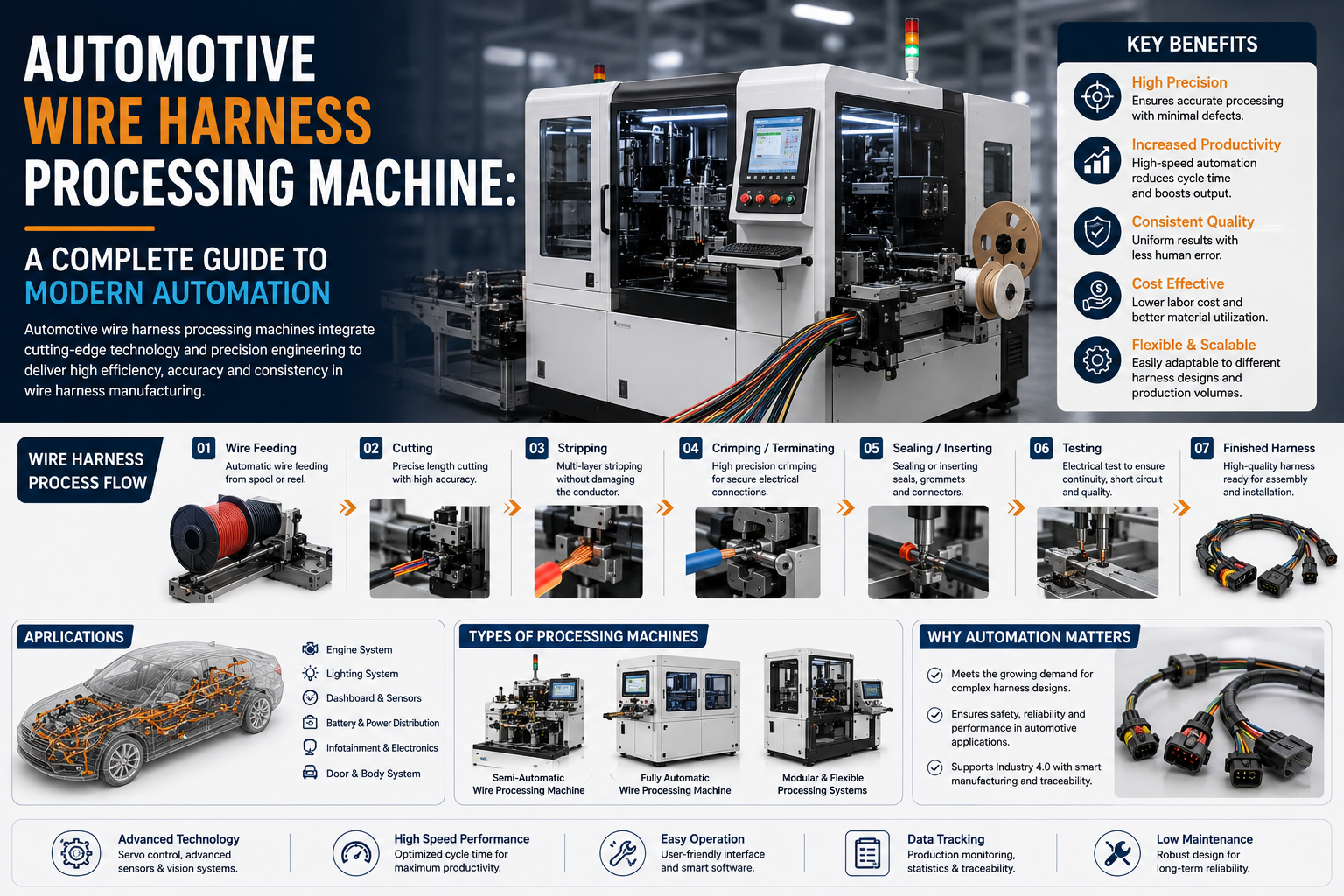
Automotive wire harnesses are among the most complex components in a modern vehicle, often containing thousands of individual wires, connectors, and terminals routed through tight spaces. Producing th...
Read More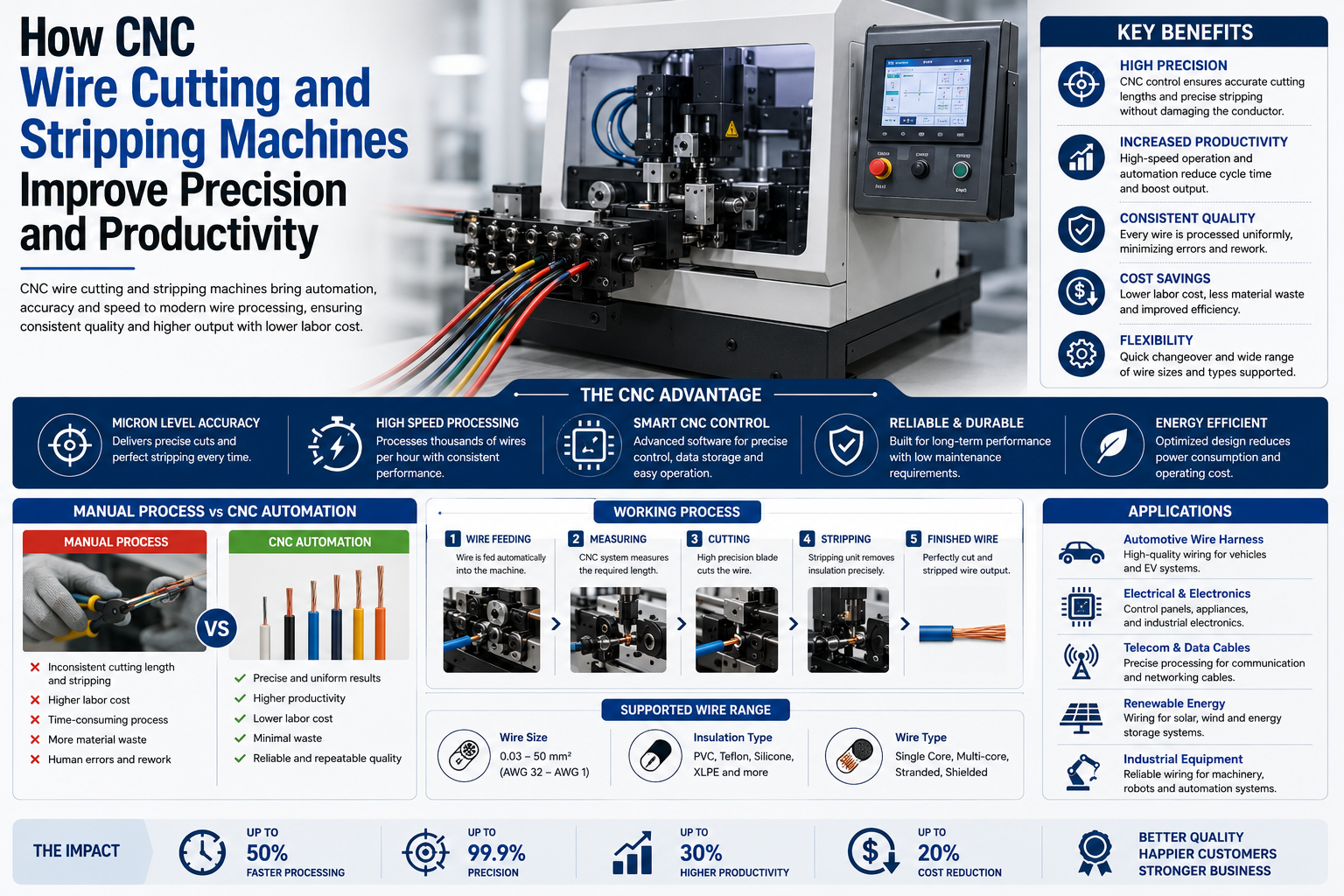
Cutting and stripping wire sounds simple, but at production scale, even small inconsistencies in length or strip depth can cause downstream problems — from failed crimp inspections to harnesses that d...
Read More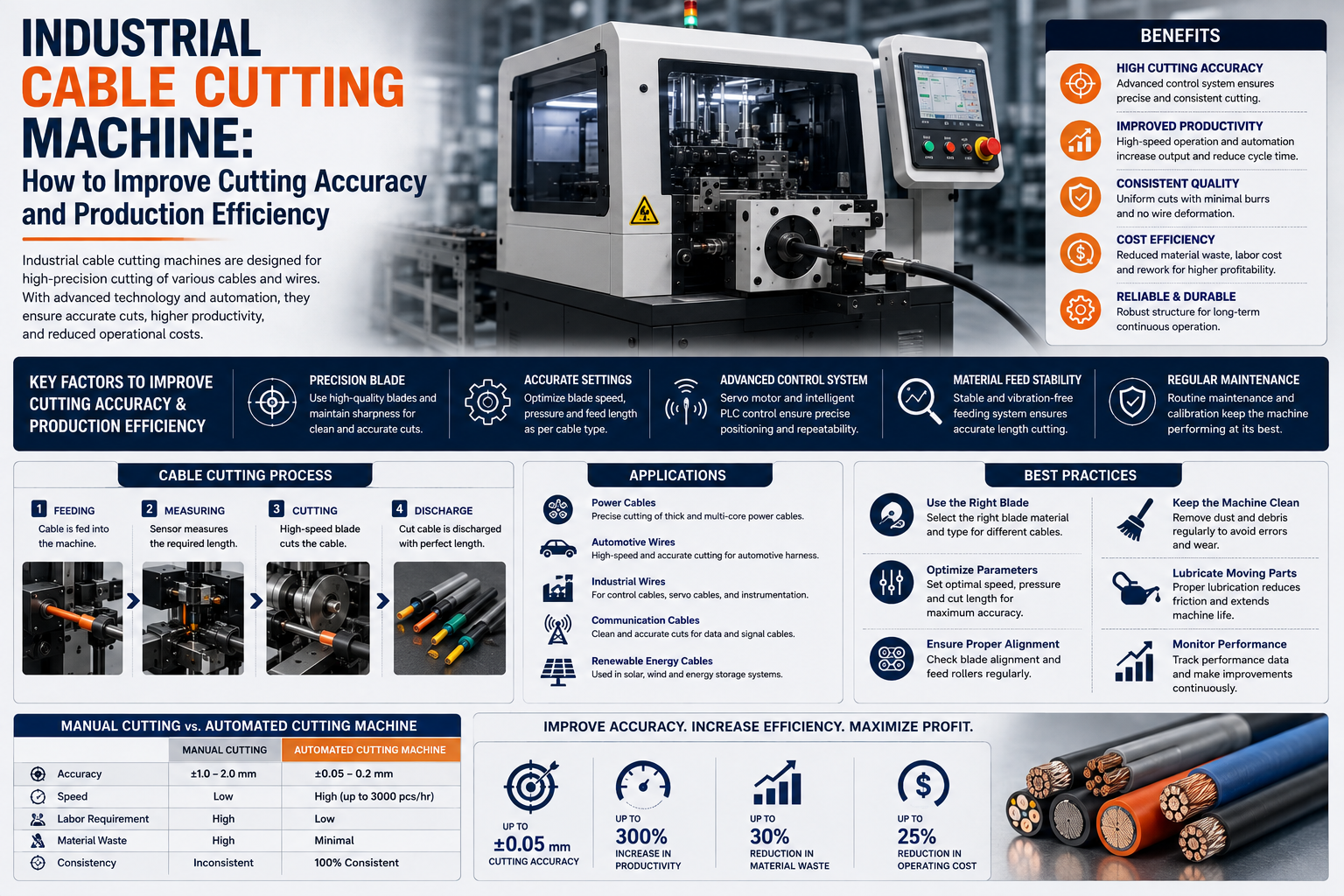
Cables used in industrial, construction, and infrastructure applications are often thicker, more heavily shielded, and more varied in construction than the wires used in electronics assembly. Cutting ...
Read MoreSign up today Writing copy is time-consuming and difficult. Headlime's artificial intelligence can take your thoughts.