Sttellar Dawang Editorial Team
Posted on 2026-09-02


Posted on 2026-09-02
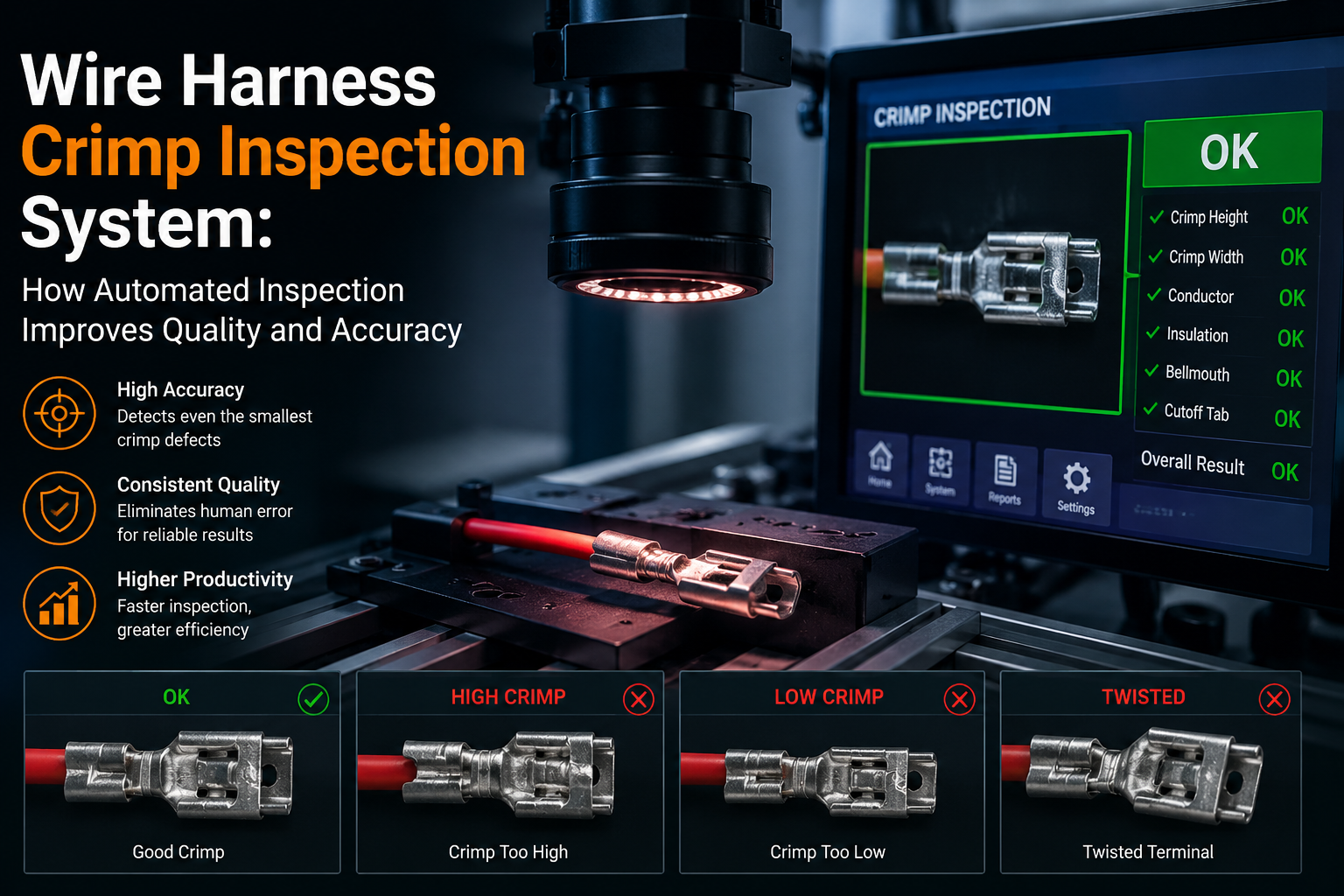
In wire harness manufacturing, a crimp that looks fine to the naked eye can still fail in the field. Loose strands, incorrect crimp height, or an off-center terminal can lead to intermittent connections, voltage drops, or complete circuit failure — problems that are expensive to trace once a harness is installed in a vehicle or machine. This is why a Wire Harness Crimp Inspection System has become a core part of modern production lines. Instead of relying on manual pull tests or visual spot checks, manufacturers now use automated vision and measurement systems that inspect every single crimp, in real time, as it is made.
A crimp inspection system typically monitors crimp height, crimp width, insulation position, conductor brush-out, and terminal alignment. High-resolution cameras capture the crimp immediately after it is formed, while force and displacement sensors on the crimping press record the crimp curve for every cycle. The system compares this data against pre-set tolerance windows and flags any crimp that falls outside the acceptable range before the harness moves to the next process step.
Manual inspection depends on the attention span and experience of an operator, and even skilled inspectors can miss subtle defects during long shifts. Automated systems don't get tired, and they apply the exact same tolerance criteria to the first crimp of the day and the ten-thousandth. This consistency is especially important for industries such as automotive, aerospace, and medical devices, where a single bad crimp can trigger a costly recall or safety issue.
Beyond catching defects, an inspection system generates traceable, timestamped data for every crimp — data that can be tied back to a specific machine, operator shift, or terminal batch. This makes root-cause analysis much faster when a quality issue does appear, and it gives quality teams the documentation needed for IATF 16949 or similar audits. Many manufacturers also see a drop in scrap and rework, since defective crimps are caught immediately rather than discovered downstream or after shipment.
Modern crimp inspection systems are designed to sit directly on or beside the crimping press, feeding pass/fail signals into the line's control system so defective harness segments are automatically rejected or marked. Many systems also connect to a factory's MES or SPC software, giving plant managers a live dashboard of crimp quality trends across every machine on the floor.
A Wire Harness Crimp Inspection System turns crimp quality from a spot-checked assumption into a fully documented, cycle-by-cycle certainty. For manufacturers looking to reduce field failures, pass stricter customer audits, and cut scrap, automated inspection is no longer optional — it's become a baseline expectation in high-reliability wire harness production.
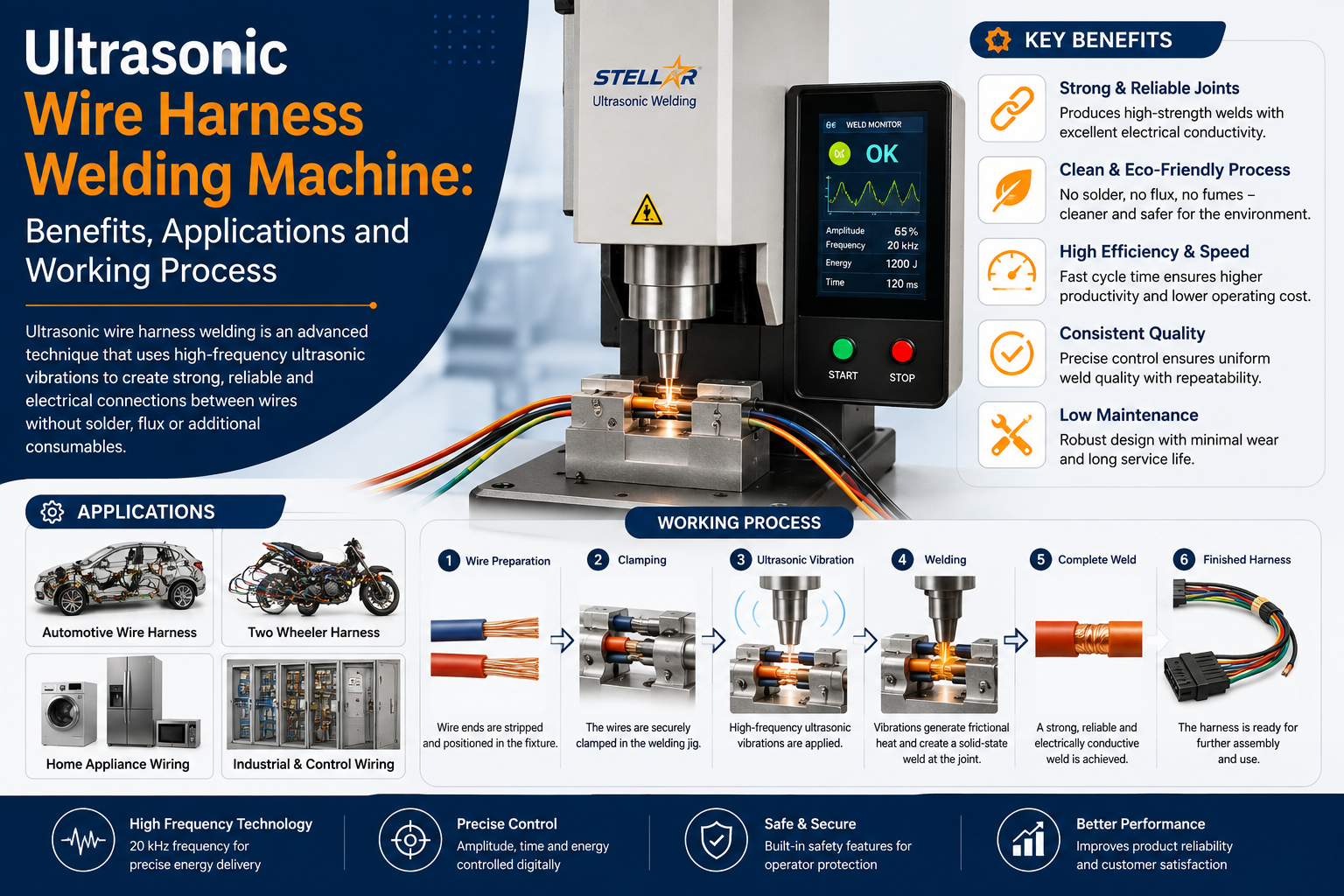
As wire harnesses grow more complex — with more circuits packed into smaller connectors — traditional soldering and mechanical splicing struggle to keep up with both speed and reliability requirements...
Read More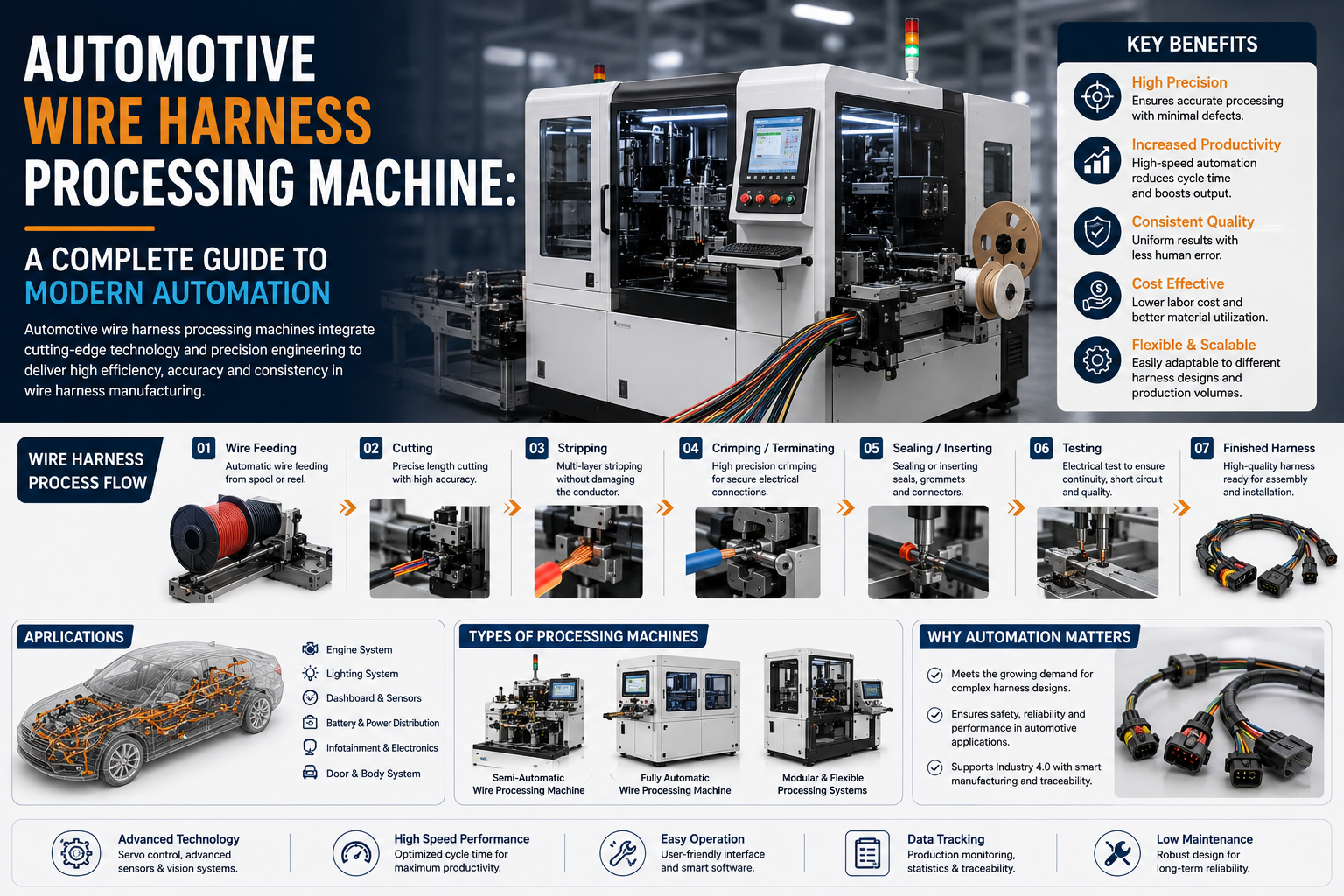
Automotive wire harnesses are among the most complex components in a modern vehicle, often containing thousands of individual wires, connectors, and terminals routed through tight spaces. Producing th...
Read More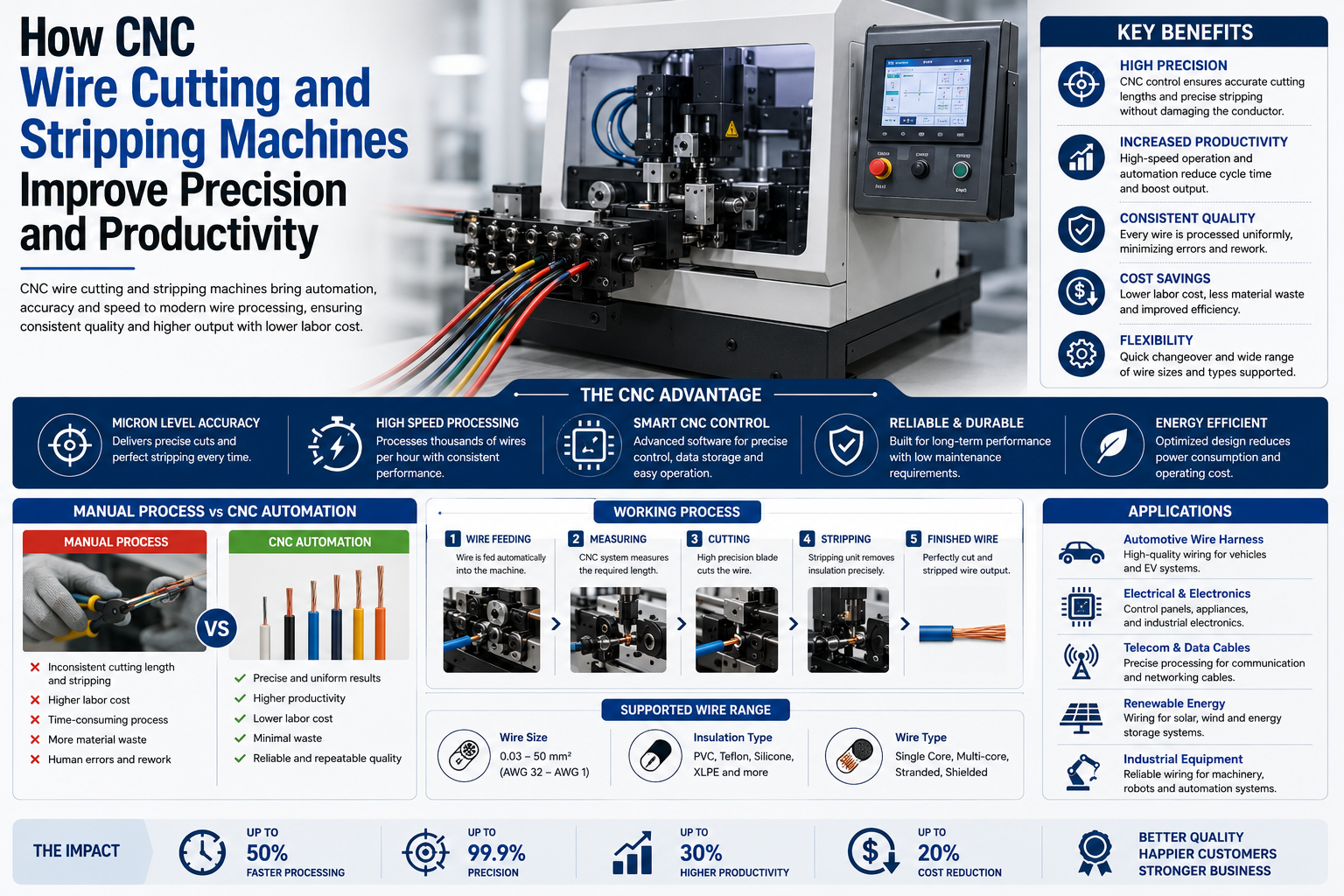
Cutting and stripping wire sounds simple, but at production scale, even small inconsistencies in length or strip depth can cause downstream problems — from failed crimp inspections to harnesses that d...
Read MoreSign up today Writing copy is time-consuming and difficult. Headlime's artificial intelligence can take your thoughts.